

 0
0
 0
0
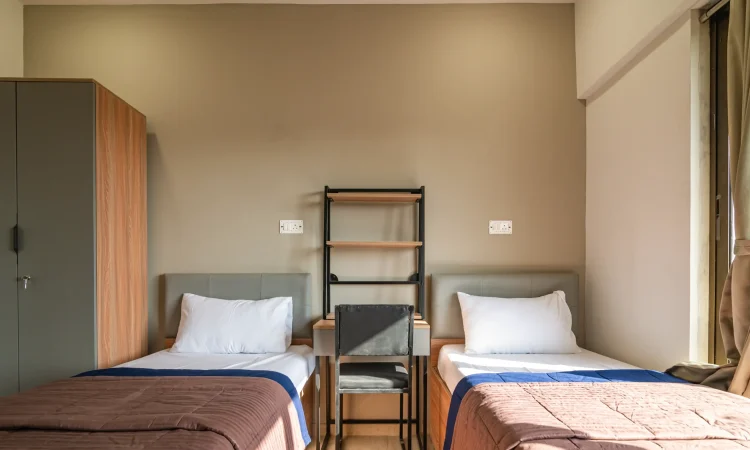
Landing a job in Pune’s IT sector means navigating accommodation decisions that will shape your daily life for the next year or longer. The rental market presents three primary options: traditional PGs ranging from ₹8,000-15,000, 1BHK apartments requiring ₹15,000-25,000 in upfront brokerage, and the growing coliving spaces in Pune offering all-inclusive arrangements from ₹19,000-25,000 monthly.
This guide breaks down what these numbers actually mean for your budget, time, and quality of life, helping you choose accommodation based on factors beyond just the monthly rent.
Quick Comparison: Housing Options for Young Professionals in Pune
|
Option |
Monthly Cost |
Upfront Cost |
Best For |
Key Trade-Off |
|
Traditional PG |
₹8k-15k |
Low |
Budget-focused professionals |
Limited privacy, extra expenses |
|
1BHK Apartment |
₹18k-25k+ |
Very High |
Long-term settlers, families |
Set up effort, ongoing management |
|
Managed Co-Living |
₹19k-25k |
Moderate |
Working professionals seeking convenience |
Less customization |
The Real Cost Breakdown: Beyond Monthly Rent
A ₹10,000 PG looks affordable until you add ₹6,000-8,000 for meals (assuming you eat out regularly), ₹2,000-3,000 for transportation, and ₹1,500 for basic utilities your PG doesn’t cover. Your actual monthly outflow: ₹21,500-24,500.
A 1BHK at ₹18,000 rent demands ₹36,000-45,000 upfront (two months deposit plus brokerage), then adds ₹5,000 for utilities, ₹8,000 for groceries and cooking gas, plus furnishing costs if you’re starting from scratch. First-month reality: ₹67,000-71,000.
Co-living in Pune typically bundles rent, meals, housekeeping, Wi-Fi, and utilities into one predictable cost. The transparency eliminates financial surprises; what you see is what you pay, with no hidden charges appearing mid-month.
Location vs. Budget: The Trade-Off That Defines Your Lifestyle
Choosing between a ₹10,000 PG in Pimple Saudagar and a ₹19,000 option in Hinjawadi Phase 1 isn’t just about ₹8,000 monthly savings. It’s about whether you’re willing to spend 90-120 minutes commuting daily to TCS, Infosys, or Wipro offices.
Calculate the math: 2.5 hours daily × 22 working days = 55 hours monthly spent in transit. That’s nearly 7 full workdays consumed by commute alone. For professionals working on-site or in hybrid models, proximity to office compounds is valued beyond just rent figures.
Fully serviced rentals within 5 km of IT hubs command premiums for good reason. Premium co-living spaces like Yukio in Hinjawadi, offering 10-minute commutes at ₹19,900, may cost ₹5,000 more than distant PGs. But the time recovered, nearly 40 hours monthly, often justifies the expense for deadline- and ambition-driven professionals. That’s time redirected toward skill development, exercise, or simply not arriving exhausted at your desk each morning.
The calculation shifts further for remote or hybrid workers. If you’re office-bound only twice weekly, spending premium rates for proximity makes less sense than choosing well-connected neighborhoods with better lifestyle amenities.
What First-Time Relocators Consistently Overlook
Infrastructure reliability matters more than amenities lists. A gym and swimming pool mean nothing if power cuts disrupt your video calls or Wi-Fi drops during client presentations. Before signing agreements, visit properties during evening hours (6-9 PM) when infrastructure faces peak load. Test the Wi-Fi speed, check water pressure, and observe backup power activation during cuts.
Community access accelerates settling in. Moving to a new city without existing networks makes co-working spaces, common areas, and resident communities genuinely valuable, not just marketing talking points. The colleague who recommends a good dentist or the neighbor who shares their weekend plans can compress your adjustment period from months to weeks.
Flexibility protects against uncertainty. Traditional rentals lock you into 11-month agreements with strict notice periods. If your project gets extended, your role changes, or you simply realize Hinjawadi isn’t where you want to base yourself long-term, rigid contracts become expensive to exit. Shorter lock-in periods (3-6 months) cost slightly more monthly but provide options if circumstances shift.
These choices shape how you spend your most productive years. When housing removes daily friction, managing bills, arranging meals, and coordinating maintenance, professionals reclaim time and mental bandwidth. That time often goes into certifications, side projects, fitness routines, networking, or simply proper rest between demanding workweeks.
For early-career professionals trying to grow faster than their job titles, convenience is not laziness; it’s leverage. A setup that runs smoothly in the background allows you to focus on building skills, relationships, and momentum instead of managing logistics.
Making Your Choice
Pune rewards professionals who value momentum over appearances. The people who grow fastest here aren’t the ones with the fanciest apartments; they’re the ones who reduce commute fatigue, avoid daily friction, and protect their time for work, learning, and recovery.
In a city built around IT parks and fast-moving careers, housing becomes part of your productivity system. Shorter commutes mean better mornings. Predictable expenses reduce mental load. Stable living environments help build routines that compound over time.
Choosing accommodation, then, isn’t just about rent or amenities. It’s about designing a living setup that supports your momentum. The right decision is the one that quietly helps you stay focused, consistent, and ready for the opportunities that brought you to Pune in the first place.